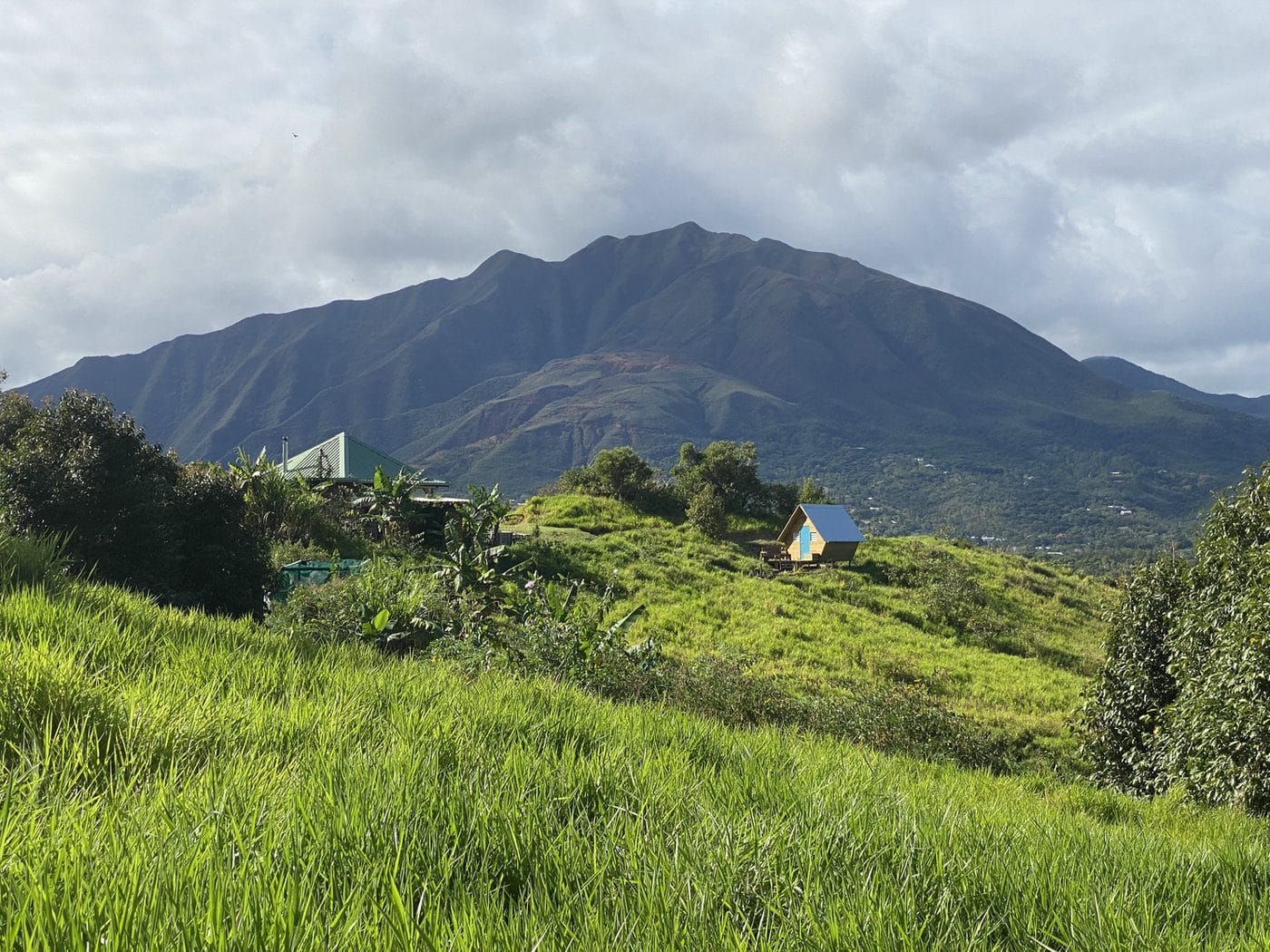
Nature is at the heart of our daily life: it is the unifying element of our learning project with children.
It is in authenticity that we wish to share with children the magic of simplicity and reconnection with oneself, with others and with the earth: understanding how nature works, rediscovering its resources, learning to respect it and live in harmony with one’s environment, and making objects in a sustainable way.
- Openness to the world and to others, and knowledge of the local culture, are an integral part of our goals.
- Living together better, encouraging cooperation, learning non-violent communication techniques.
- Having fun in a natural, caring setting, in joy; letting imagination run free and creating according to one’s wishes; paying attention to one’s sensations.
We alternate active, creative phases with phases of play, dreaming and relaxation that foster creativity. Free-time phases are nevertheless supervised with a caring eye to ensure the children’s safety. The course programme is our guide but not our master: we constantly adapt the schedule to the weather and the energy of the group, and we allow ourselves last-minute changes if they seem a better response to the needs of the moment.
Our values
Kindness
At the start of each stay, this principle is set among all participants: children, young people and adults. Kindness means respecting others in their differences and sometimes their disabilities; it means learning to help each other, communicate and manage conflicts without violence.
Self-confidence
We build it day by day by entrusting responsibilities to children and teenagers, by practising games and creative activities that encourage expression, and by learning kindness and non-judgement towards others… and towards oneself.
Managing emotions
A group stay often brings strong emotions. Participants learn to identify them, to welcome them, to express them through words, gestures and sometimes drawing, to manage conflicts through mediation techniques, and to manage stress through relaxation and meditation.
Cooperation
School, society and the media put a lot of emphasis on the individual and on competition. In our courses we also use cooperative games to learn to win or lose together, and to work as a team without leaving anyone by the wayside. Creative projects carried out in small groups are also an opportunity to learn to live and do things together.
Day-to-day running
Daily tasks
For the older group, the leaders and the children take turns with the tasks: setting and clearing the table, preparing the snack, tidying and cleaning. The groups rotate with a daily draw so that everyone discovers each activity. This method mixes the children and creates bonds between those who do not know each other.
Express, propose, decide
Children are put in a position to express their needs and expectations as often as possible, to make proposals, make choices and take decisions, and therefore to take responsibility for the consequences, as long as this remains compatible with their emotional and physical safety and with respect for the rest of the group.
In this way the child learns about legitimate authority, an essential step towards democracy. However, once a prohibition has been explained, it is not negotiable: the adult remains the one who sets the framework of what is possible and, above all, of safety.
We teach them to rephrase prohibitions as more positive recommendations. Many children, influenced by the habits of school and society, express rules in terms of “do not”. We invite them to rephrase these rules positively: “do not disturb” becomes “respect”, “do not eat all the cakes” becomes “leave some cakes for friends”… Rules then take on meaning and become more pleasant to follow!
Children are invited to take part in group expression and discussion sessions. Each person can express their emotional state, what they liked and liked less, and their expectations and suggestions.
Settling a conflict, in three steps
1. Describe the facts
Learning to say what happened.
2. Speak in “I”
Speaking in “I” rather than “You”: taking responsibility for one’s actions and being able to talk about one’s feelings.
3. Look for a compromise
Finding a solution to “make up for” any harm done to the other person.
Projects to learn to cooperate
Carrying out a project in small groups helps children learn to express themselves, listen, get to know each other, trust each other, discover and respect each person’s differences and complementarities, and cooperate.
Each child also carries out an individual project, ambitious and original enough to make them dream and motivate them, and at the same time achievable given the time available, their abilities and the means at their disposal. It is essential that children have a finished creation at the end of the stay: this is how they learn to turn their dreams into concrete goals.
Several ages, several needs
Mixed ages allow the older children to consolidate what they have learned by explaining and supporting the younger ones, which strengthens their self-confidence, while the younger ones are stimulated by the older ones, curious to discover their techniques. However, children between 3 and 15 do not have the same needs, which is why the themes of the courses are announced with the age range concerned (4–8, 7–12, 10–15).
The review, at the end of the stay
The children gather to talk about what they experienced. What did they discover? What did they feel? What did they like, not like, what difficulties did they meet? What worked, what failed, and why? If we had to do it again, what would we change?
This phase is essential, because self-confidence is built on the ability to learn from successes as well as failures. Failures must be played down and turned into a source of pride. The aim is to put words on experiences: children can also draw or write down their memories.